
Sunday’s CicLAvia is projected to be a June-gloomy-sunny-afternoony 74º. The World Cup is upon us and there will be lots of folks in their respective soccer/football/futbol kit. The Militant will definitely be there for his 66th straight CicLAvia, of course. Execute Order 66! So see you or not see you on the streets this Sunday! Go Dodgers and Go [insert World Cup team of your choice here]!
Oh yeah, if you found this Epic CicLAvia Tour guide useful and visit any of these sites, please add the #EpicCicLAviaTour hashtag to any social media post that includes it. The Militant will be glad to re-tweet!
And if you appreciate The Militant’s work, kick him a little love via PayPal! He *hates* asking for money, but you know how it is these days…A Militant’s gotta renew his web hosting package! He sacrifices a lot of his time to do this, so your support is much appreciated!
To support The Militant Angeleno: https://www.paypal.com/donate/?hosted_button_id=K5XC5AM9G33K8
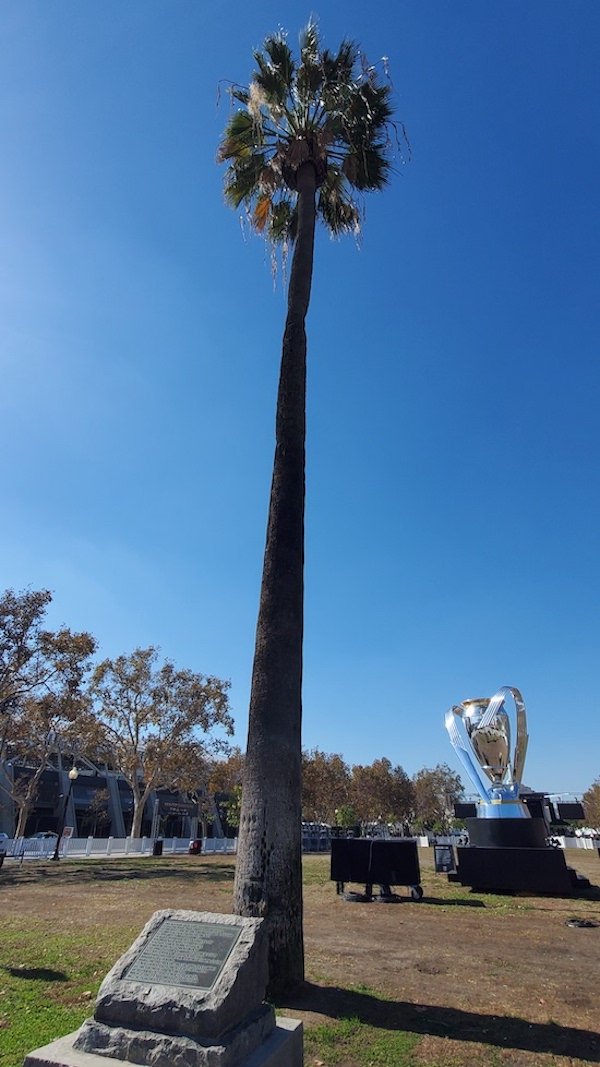
1. Historic Southern Pacific Palm Tree
Re-planted 1914
3901 S. Figueroa St, Exposition Park
Back in the late 1800s-early 1900s, the Southern Pacific Railroad operate out of a train station called the Arcade Station, on 5th and Alameda streets. A lone palm tree stood outside the station and functioned as a landmark for arriving passengers coming in from San Francisco or points east. In 1914 (dude, over a hundred years ago) the Arcade Station was demolished (no, it wasn’t consumed by a fire) to make way for a more modern station, called Central Station, and the palm tree had to go. So beloved was the palm tree that, instead of being cut down, it was moved to Exposition Park, where it has stood ever since. Like its neighbor the Space Shuttle Endeavour, it was a popular icon back in its day, and it’s probably safe to assume that its transport through town was an event in itself. A little-known historic marker at the base of the tree tells the whole story. So if you want to see a palm tree that was planted there over 100 years ago, there you go.
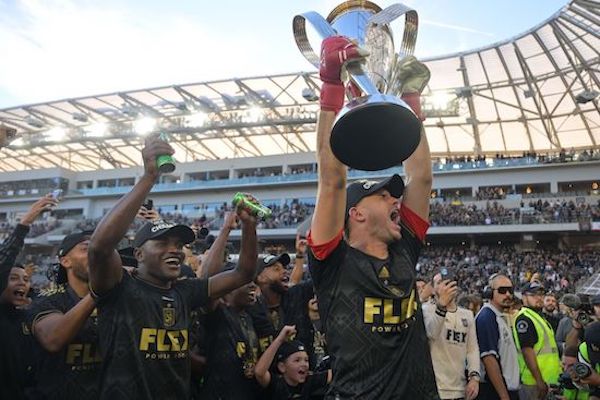
2. BMO Stadium
2018
3939 S. Figueroa St, Exposition Park
Home of the 2022 MLS Cup Champion Los Angeles Football Club soccer team, this $350 million, 22,000-seat venue is the first open-air stadium to be built in the City of Los Angeles since Dodger Stadium opened in 1962. Known from its 2018 opening as Banc of California Stadium before the naming rights were bought by the Canada-based Bank of Montreal (Soorry, eh?) in January 2023, BevMo BMO Stadium was built on the former site of the 16,000-seat Los Angeles Memorial Sports Arena (1959-2016), which was the first Los Angeles home of the Lakers (1960-1967), the Clippers (1984-1999) and venue of Boxing matches during the 1984 Olympics. BMO Stadium is also the home venue of the Angel City FC National Women’s Soccer League team and will host the Flag Football and Lacrosse tournaments during the 2028 Olympics.
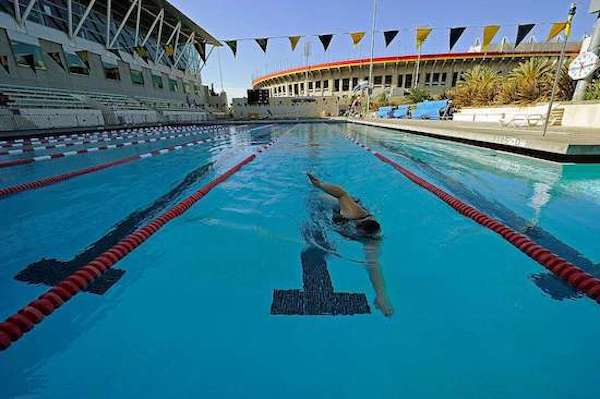
3. Los Angeles Swimming Stadium
1932
Bill Robertson Drive & Park Lane, Exposition Park
The Coliseum’s little bro, Los Angeles Swimming Stadium was the 10,000-seat venue for the 1932 Olympic swimming, diving and water polo competitions, as well as the aquatic portions of the pentathlon event. Olympians such as Buster Crabbe swam in its waters. After the games, it became a public pool, and in the ’50s, USC’s swim team used it as their training and competing venue. After over a half century of wear, and damage from the 1994 Northridge Earthquake, the swim stadium was renovated in 2002 and operates today as the LA84 Foundation/John C. Argue Swim Stadium. Marco…Polo!
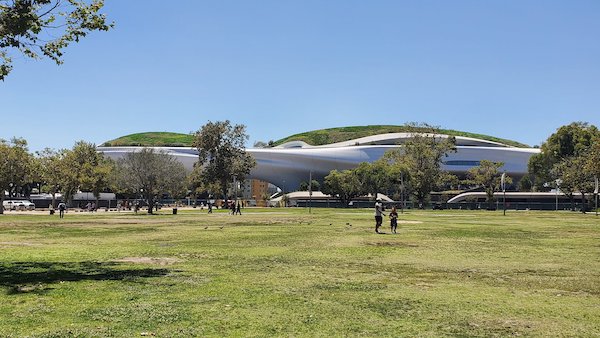
4. Lucas Museum of Narrative Art
2026
Vermont Avenue and 39th Street, Exposition Park
Taking shape on west side of Exposition Park like a Naboo Royal Starship is the $1 billion+ (privately-funded) George Lucas Museum of Narrative Art (or, “The Luke,” as The Militant would like to call it), a state-of-the-art visual, cinematic and interactive museum founded by ‘Star Wars’ creator and filmmaker George Lucas and his wife Mellody Hobson. The site, located in close proximity to Lucas’ alma mater, USC, beat out other site proposals in San Francisco (home of Lucasfilm, Ltd) and Chicago (Hobson’s birthplace) when it was first announced in 2017. Originally intended to open in 2021, it has met numerous delays due to the COVID-19 pandemic and various construction issues, but it will open at long last on Tuesday, September 22.
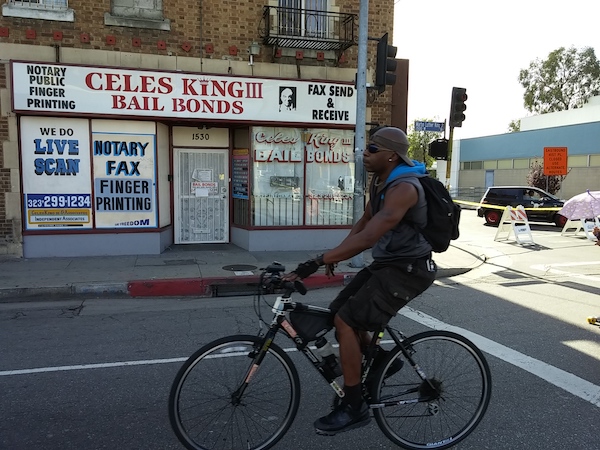
5. Celes King III Bail Bonds
1949
1530 Martin Luther King Jr Blvd, Vermont Square
Why is a bail bonds joint listed in the Militant’s CicLAvia tour? WTF? Well, before 1983, this street was known as Santa Barbara Avenue. Celes King III was the person who lobbied to change the name of the street to Martin Luther King Jr. (no relation) Blvd. A real estate broker, bail bondman, outspoken Republican, former Tuskeegee Airman, failed City Council candidate, co-founder of the Brotherhood Crusade and founder of the annual Kingdom Day Parade on the MLK Holiday, he successfully lobbied the L.A. City Council in 1983 to re-name Santa Barbara Ave. after the slain civil rights leader — albeit not without controversy. Some of his critics accused him of doing it to irritate then-Mayor Tom Bradley, one of his political enemies, and others have criticized CK3 of conflict of interest (his residence – he lived in the apartment upstairs – and his bail bonds business were located on Santa Barbara Avenue after all) and even ego trippin’ (the short-hand street signs say “King Bl”– the same as his own last name). Whether this was a self-aggrandizing stunt or a genuine tribute to an American hero, we will never know: Celes King III died in 2003.
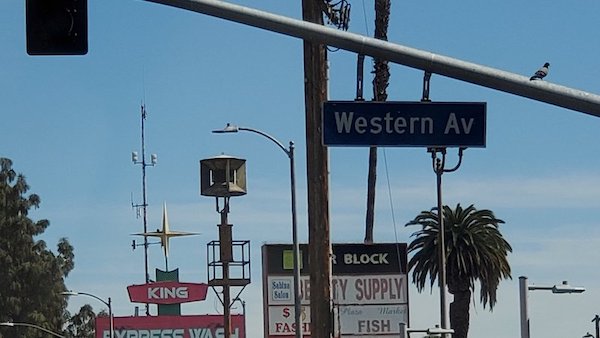
6. Civil Defense Air Raid Siren #60
1940
1662 W Martin Luther King Jr Blvd, King Estates.
If the Russians ever invade Los Angeles, just know that we have 179 Civil Defense air raid sirens in place around the City (which may or may not still work…), like this one along the CicLAvia route, which is identified as Civil Defense Siren #60 at Martin Luther King Jr. Blvd and Western Avenue. Built in 1940, this siren is classified as a Federal Model SD-10, or the “Wire Spool” style.
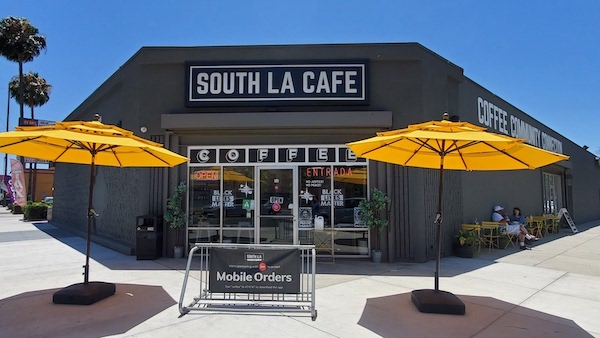
7. South LA Cafe
2019
1700 Browning Ave, King Estates
Opened in November 2019 by owners Celia Ward-Wallace and her husband Joe – both longtime residents of the area – to address food inequality (they also own the South L.A. Market on the other side of the minimall) and create a cultural hub in the neighborhood, South L.A. Cafe not only sells caffeinated fare and pastries, but also provides a venue for open mic and poetry performances. The cafe near the corner of Western and MLK also sells various clothing which bears “South L.A.” and “South Central” for locals who wish to represent with neighborhood pride (or for those from outside the area who just want to front). The establishment was also featured in the 2023 Hulu comedy series, This Fool, portraying the protagonists’ rival business Guilt Free Cafe. South LA Cafe has since grown into a local chain, with four other locations around its namesake area.
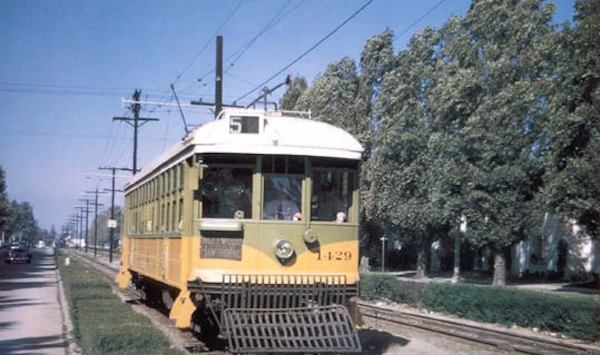
8. Los Angeles Railway Yellow Car Right Of Way
1902
Leimert Blvd between Martin Luther King Jr Blvd and Vernon Avenue
See that nice, wide, landscaped median branching south of MLK through Leimert Park? Could you ever guess what it used to be? Yup, it was the right-of-way for the Yellow Car trolleys of the Los Angeles Railway, part of The 5 Line, which ran from Eagle Rock (ya, rly) to Hawthorne. Actually The CicLAvia route from the 110 Freeway to Leimert Avenue was part of the 5 Line, and because of that Leimert Park was originally planned as a transit-oriented community (it was also originally planned as a whites-only community, but so much for that, eh?) Incidentally, part of this same historic Yellow Car Line, along both Crenshaw Blvd and Florence Avenue, is used today as part of Metro’s (K) Line. The Right of Way was also dedicated in 2009 as “Joyce Perkins Parkway” in recognition of the community work of co-founder and former executive director of the nonprofit Los Angeles Neighborhood Initiative (LANI).
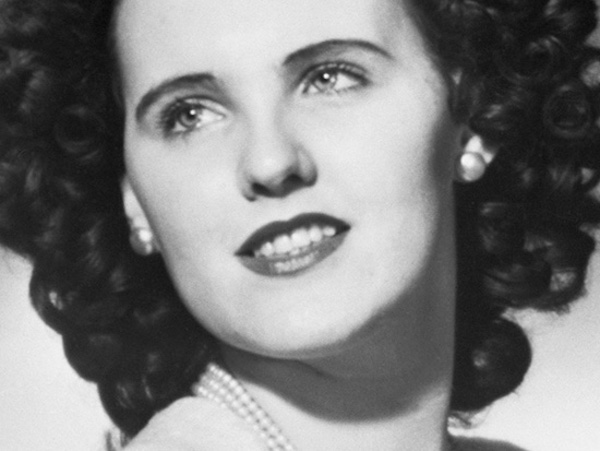
9. Black Dahlia Body Site
1947
3825 S. Norton Ave, Crenshaw District
On the morning of January 15, 1947, the mutilated body of 22 year-old waitress Elizabeth Short, a.k.a. “The Black Dahlia” – the victim of arguably the most famous unsolved murder case in Los Angeles history – was discovered on this site (at the time an empty lot; the house was not built until 1956) by a local woman walking with her young daughter. Short, a transplant from Boston who was reportedly an aspiring actress, was missing the week prior to the discovery of her body, and the case garnered national headlines due to the gory details of her murder. The LAPD’s investigation yielded over 150 suspects but no arrests. The cultural intrigue surrounding Short’s death became a huge influence on the 1940s ‘Los Angeles Noir’ phenomenon.
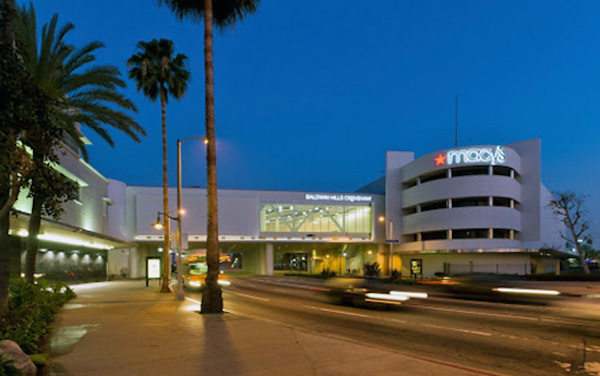
10. Baldwin Hills Crenshaw Plaza
1947
3650 Martin Luther King Jr. Blvd, Crenshaw District
Originally known as the Broadway-Crenshaw Center, it opened on November 21, 1947 as one of the first auto-centric regional shopping centers in the US. The Streamline Moderne shopping center, designed by Albert B. Gardner, was home to a 5-story Broadway department store, a Vons supermarket and a Woolworth’s discount store. In 1949, a Silverwoods clothing store opened, and the landmark bridge over MLK (then known as Santa Barbara Avenue) was built to connect with the existing 1947 May Company building on the north side of the street. Today’s version of the shopping center came about during a late 1980s remodel.
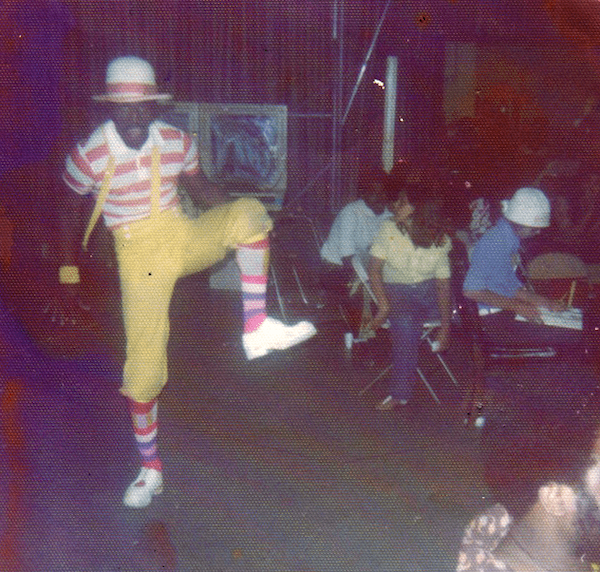
11. Don “Campbellock” Campbell Square
2020
Stocker Street and Crenshaw Boulevard, Crenshaw District
This streetcorner was dedicated by the Los Angeles City Council in January 2020 for the 1970s dancer and choreographer whose robotic, hydraulic and acrobatic “Campbellock” dance – known as “locking” and the predecessor of “pop-locking” – was immensely influential in hip-hop and African American performing arts as a whole. In the late 1960s, Campbell studied dance at Los Angeles Trade Tech College. In 1971, he earned fame as one of the featured dancers on the groundbreaking TV show, Soul Train, which broadcasted his dance moves to a national audience. After leaving the show in 1973 over a dispute whether dancers on the show should get paid, he formed a dance group known as The Campbellock Dancers, later known as The Lockers, of which choreographer and “Mickey” singer Toni Basil, What’s Happening actor Fred “Rerun” Berry and Breakin’ actor/dancer Adolfo “Shabadoo” Quinones” were all onetime members of the group. A longtime resident of the South Los Angeles area, Campbell passed away in March 2020.
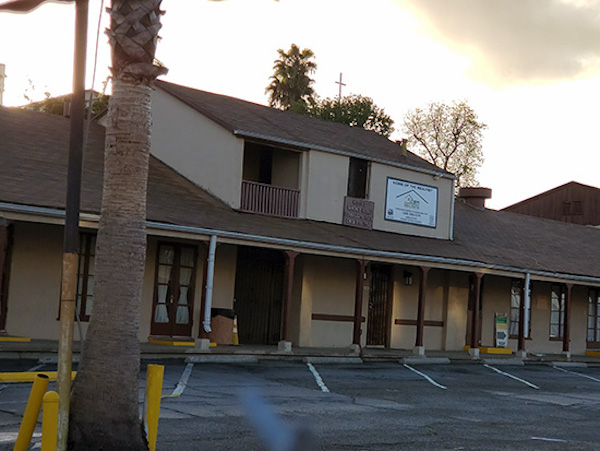
12. Sanchez Adobe – Oldest Building in Los Angeles
1791
3725 Don Felipe Drive, Baldwin Hills
In the streets behind the Baldwin Hills Crenshaw Plaza stands what may or may be the oldest building in Los Angeles. The crown was long believed to belong to the 203 year-old 1818 Avila Adobe on Olvera Street, but further historical research in 2012 revealed that this structure, originally part of Rancho La Cienega o Paso de la Tijera, dates back some 50 years prior to when it was deeded to Don Vicente Sanchez in 1843, making it around 230 years old. The building was later owned by Baldwin Hills’ namesake Elias Jackson “Lucky” Baldwin, who brought freed slaves to work in his homestead after the Civil War. The historic structure – 30 feet wide and two stories tall – has been integrated into a large single-story building built in 1927. It is currently home to Agape Church of Los Angeles.
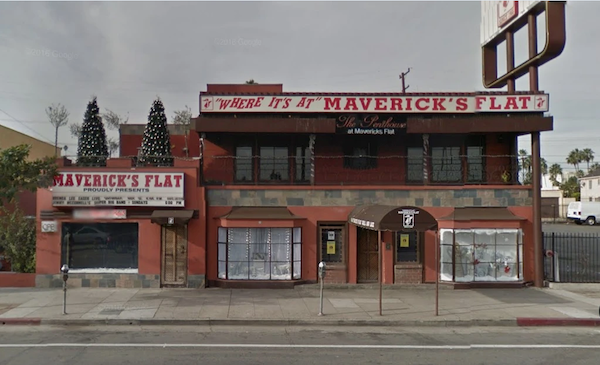
13. Maverick’s Flat
1966
4225 Crenshaw Blvd, Leimert Park
Founded in the mid-1960s by stage producer John Daniels, Maverick’s Flat was an influential nightclub and concert venue that featured premiere and up-and-coming jazz, soul and R&B artists. Motown soul icons The Temptations – dude, The Temptations – performed on its opening night in February 1966, and artists such as Marvin Gaye, The Commodores, Parliament, and Ike and Tina Turner all graced its stage. The venue took up the mantle as the focus of Black Los Angeles’ entertainment and arts scene as Central Avenue’s influence faded away, shifting the epicenter west to Leimert Park where it remains today. It was also “the place to be seen” as Hollywood celebrities such as Marlon Brando were known to have hung out there. It closed down as a regular concert venue in the 1980s and remained operating as a rental/special events venue. Maverick’s Flat received a Los Angeles City Historic-Cultural Monument designation in 2000 and the building was renovated in the 2010s, and in 2021, the establishment re-opened as the rental venue Nina Roza’s Penthouse at Maverick’s Flat.
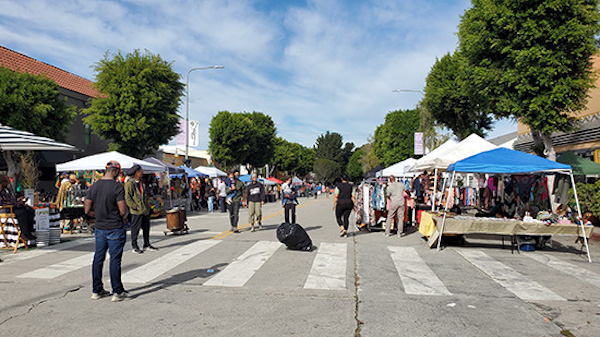
14. Leimert Park African Marketplace & Drum Circle
c. 2010
Degnan Blvd between 43rd Street and 43rd Place, Leimert Park
What can The Militant say about Leimert Park? The heart and soul of Los Angeles’ African American community can warrant an Epic Guide of its own. From iconic institutions like the Barbara Morrison Performing Arts Center to the jazz-centric World Stage to the eponymous city park that has been the site of countless celebrations, rallies, demonstrations and memorials over the years, where the annual Kingdom Day Parade on Martin Luther King Jr. Day ends up. It’s what the late filmmaker and Los Angeles native John Singleton once described as “The Greenwich Village of L.A.’s Black Community.” The true flavor of Leimert Park happens every Sunday from 10 a.m. to 5 p.m. when Degnan Boulevard is transformed to an outdoor street market which had its origins in the annual Labor Day weekend African Art & Music Festival which lasted from the early 1990s to 2009, and then soon evolved into the weekly bazaar which features African and African American clothing and craft vendors and Southern, African and Jamaican food stalls. And there’s a drum circle too.
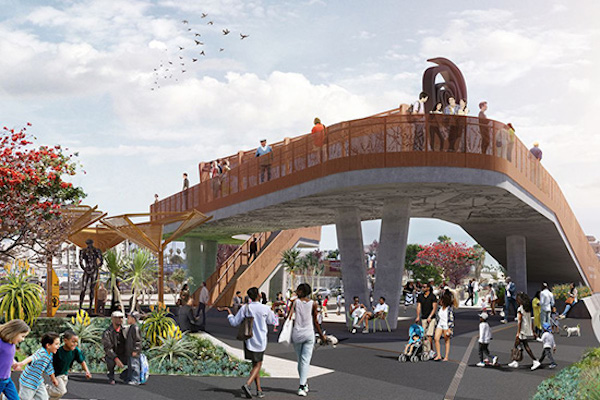
15. Destination Crenshaw
202?
Crenshaw Boulevard corridor between Leimert Park and Hyde Park
A unique 1.3-mile outdoor art gallery featuring permanent and temporary works, integrated with pocket parks, street furniture and landscaping makes up Destination Crenshaw. Designed by Zena Howard, the project, slated to open in 2023 2024 2025 2026 the foreseeable future, will highlight the art, stories, creative energy and rich African American and African cultural heritage of the Crenshaw Corridor. The focal point of this linear art project is the triangular Sankofa Park (currently a construction site), sandwiched between Vernon Avenue and the northern tunnel portal of the Metro K Line, where many of the structures of Destination Crenshaw are already visible.

You must be logged in to post a comment.