
This Sunday’s 63rd-ever CicLAvia will be the sixth this year and the 18th iteration of the “Heart of L.A.” route, a format which has run between Central Los Angeles to the real Eastside via Downtown Los Angeles with a crossing over the Los Angeles River since CicLAvia began on 10/10/10. Most importantly, this 7.15-mile route will be celebrating CicLAvia’s Quinceañera – that’s 15 years of open streets in Los Angeles! Though the HOLA route has had myriad variants over the years, we’re taking it back to 2010 when it ran along 7th Street in MacArthur Park (though the O.G. CicLAvia route originally continued on through Koreatown and East Hollywood). Although the HOLA route happens every October or thereabouts, this is the first time since 2021 when the route featured a terminus at MacArthur Park.
Like all CicLAvia routes that involve DTLA, Hollywood or the beach, this HOLA route will undoubtedly pull in a huge turnout. And as with every October, CicLAvians will be dressed in Halloween costumes or their Doyer gear, this time to root on our Defending World Champions on their upcoming trip to the NLCS in their quest to go Back To Back! It’s gonna be Another Perfect Day on the CicLAvia route this Sunday! We love it!
As usual — Happy CicLAvia, GO DODGERS in the NLCS (beat the Brewers or Cubs), Go Rams, Go Kings Go, Go LAFC or Galaxy, Go Bruins or Trojans and see you or not see you on the streets!
If you found this Epic CicLAvia Tour guide useful and visit any of these sites, please add the #EpicCicLAviaTour hashtag to any social media post that includes it. The Militant will be glad to re-tweet!
And if you appreciate The Militant’s work, kick him a little love via PayPal! He *hates* asking for money, but you know how it is these days…A Militant’s gotta pay his bills! He sacrifices a lot of his time to do this! Your support is much appreciated!
Support The Militant Angeleno!
https://www.paypal.com/donate/?hosted_button_id=K5XC5AM9G33K8
The Militant would like to thank Joe Ryan for his continual support to keep this site alive!
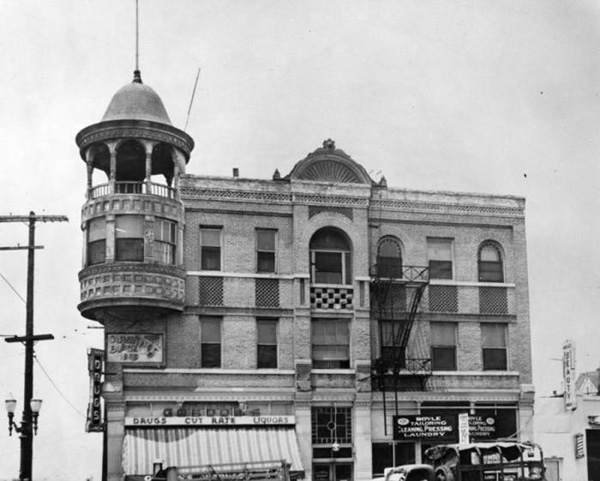
1. Boyle Hotel/Cummings Block
1889
103 N. Boyle Ave, Boyle Heights
This brick Queen Anne-style building, built in 1889 and designed by architect W.R. Norton was one of the first commercial buildings in Boyle Heights, and is one of the longest-standing commercial buildings in all of Los Angeles. It was developed by George Cummings, an Austrian immigrant who arrived in California during the Gold Rush era as a farmer and cattle rancher, and settled here in Boyle Heights in the 1870s. The hotel was an important social and political center in the late 19th and early 20th centuries, and in the 1960s, started to become a popular lodging spot for Mariachi musicians. It recently underwent a major renovation which created 51 low-income housing units and three street-level retail units, one of which is home of the Libros Schmibros bookstore/lending library.
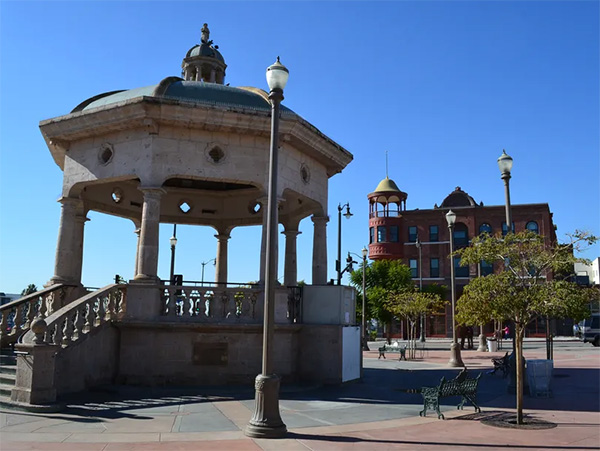
2. Mariachi Plaza
1889
1st St and Boyle Ave, Boyle Heights
This is the new town square for Boyle Heights, where Mariachi musicians have been hanging out to get picked up for since the 1930s. The Kiosko, or bandstand, that sits in the plaza is actually not that historic. It was given as a gift from the Mexican state of Jalisco, who literally shipped it over in 1998 where it was assembled in place. But it only gets used once a year for the Santa Cecilia Festival around every November 21. The plaza is also home of the Metro (E) Line station of the same name, which opened in 2009 (as the Metro Gold Line). This place could warrant a Militant blog post in itself — no, an entire week of posts! Don’t miss the Farmers Market events there every Friday!
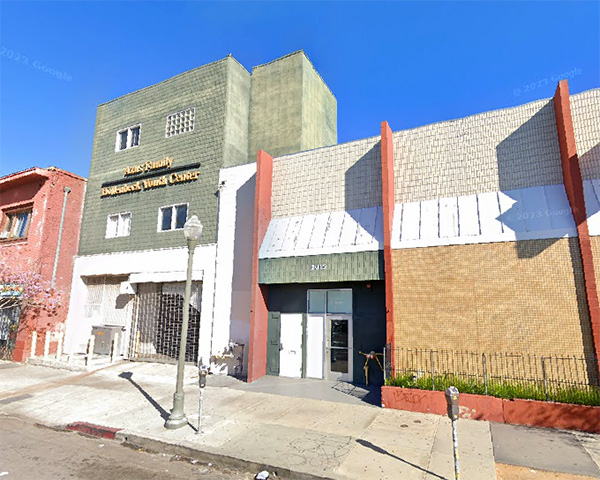
3. Hollenbeck Youth Center
1976
2015 E. First St., Boyle Heights
Established as a partnership between local businesses and the LAPD to provide activities and opportunities for local youth as a response to local riots and student protests in the early ‘70s, this youth center has benefited many kids from The Barrio, notably a local boy named Oscar de la Hoya, who first trained at the center’s boxing gym as a youth before winning an Olympic Gold Medal in 1992.
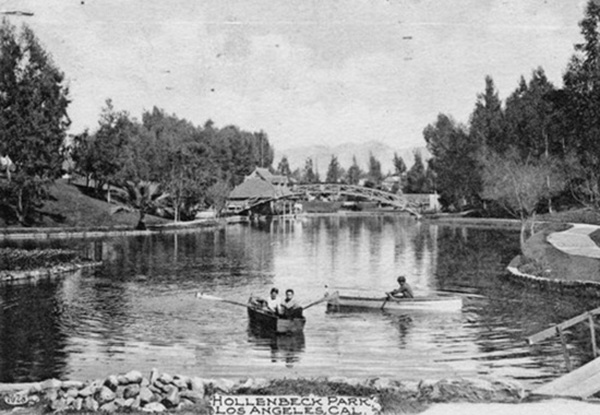
4. Hollenbeck Park
1892
4th and St. Louis streets, Boyle Heights
John Edward Hollenbeck was a rich dude in the late 19th century who founded the First National Bank of Los Angeles and purchased parcels of land in Downtown, the San Gabriel Valley and the Eastside, where he made his home. Hollenbeck was also credited with the creation of what is now called Exposition Park. His sister married his friend, James George Bell, who founded…Yep, you guessed it! After Hollenbeck’s death in 1885, his widow, Elizabeth, donated a 21-acre parcel of land, which was essentially their front yard, to the City. One of the Los Angeles’ oldest parks, it was established in 1892 and continues to function today.
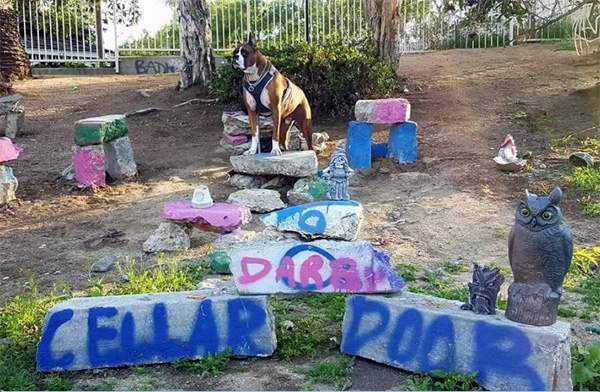
5. Boyle Henge
2015
Southwest corner of 6th Street and Boyle Avenue, Boyle Heights
On the Boyle Heights side of the 6th Street viaduct stands a curious, quirky, ever-changing assemblage of concrete blocks (resembling the referential Druid structure in the English countryside), and sometimes garden gnomes and animal statues. Whatup with this? Apparently it’s an art installation made by some locals who call themselves “Circle 6,” that were “inspired by the work of artists Christo and Jeanne-Claude.” Boyle Henge even has its own Instagram account.
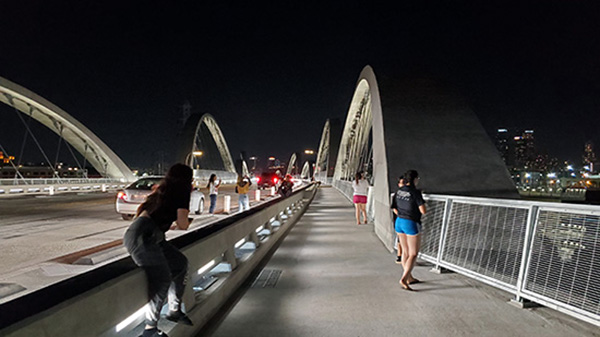
6. 6th Street Viaduct (2.0)
2022
6th Street over the Los Angeles River, Downtown Los Angeles & Boyle Heights
The 6th Street Viaduct is really a tale of two bridges: The first, built in 1932, crossing over the Los Angeles River and several railroad tracks, lived a decent life serving as a 24-hour mediator between Downtown Los Angeles and Boyle Heights, occasionally doing extra work in movies, television shows and music videos. But in the mid-2010s, it was diagnosed with Alkali-Silica Reaction, a very lethal disease it had since birth, where high alkaline content in the concrete would cause it to become brittle and collapse in an earthquake. So it had a farewell celebration in October 2015 and it was euthanized in February 2016.
But, after a 6-year re-animation process in July 2022, the 6th Street Viaduct 2.0 was reincarnated into a slick, cybernetic form. It had large curving arches (that people could easily climb on), bright, programmable LED floodlights (that made it Instagram-friendly) and a wider road where people could do donuts and…things got out of hand. The bridge was closed for a time, because of the behavior of 21st century people and their reactions with 6th Street Viaduct 2.0.
Things had calmed down since and Angelenos were once again able to you can ride, walk, jog, scoot or just chill on 6th Street Viaduct 2.0. – but in the past couple of years, due to some punks stealing the copper electrical wiring and our City government’s lackadaisical attitude towards solving problems, the bridge has remained dark at night, creating safety issues for those who traverse it. So enjoy riding on the bridge during broad daylight, this is your only opportunity.
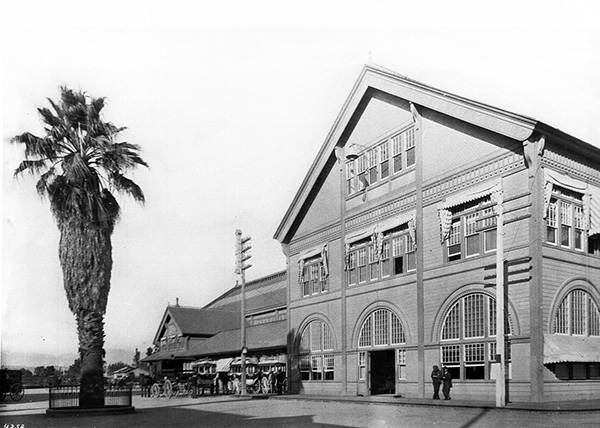
7. Site of Southern Pacific Arcade Station
1888-1914
4th and Alameda streets, Downtown Los Angeles
Before there was a Union Station, there were various rail passenger terminals in Los Angeles, many of them just a short distance from the Los Angeles River. On what currently stands as a large shopping mall, this was the original site of the Southern Pacific Railroad’s Arcade Station which served passengers up until 100 years ago. A popular landmark of this station was a young palm tree, which was moved a century ago to Exposition Park where it stands today, much taller, in front of the Los Angeles Memorial Coliseum. Unfortunately for indie rock fans, the Arcade Station was not devastated by a Fire, but was dismantled and replaced by a new station, the Central Station, located one block south.
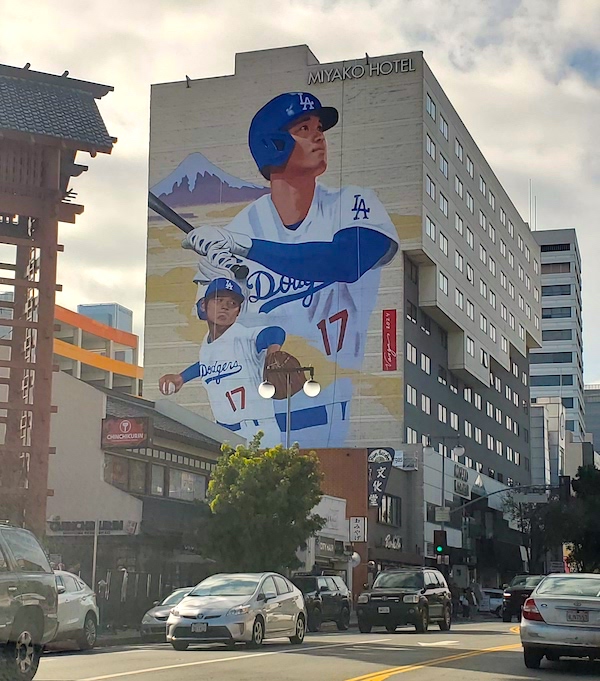
8. Shohei Ohtani Mural
2024
328 E. 1st St., Little Tokyo
This 150-foot tall mural of Dodgers World Champion, 3-time MVP mega-star and 50/50 Club founder Shohei Ohtani on the east-facing wall of the Miyako Hotel Los Angeles was painted over 13 days in March 2024 by artist and Boyle Heights native Robert Vargas. Formally entitled, L.A. Rising, the $700 Million Dollar Man is depicted twice, reflecting his two-way nature: the large image shows him post-swing as a designated hitter and the smaller likeness depicts him pitching on the mound (which we won’t get to see until 2025). The artist painted the mural – the largest of several bearing The Unicorn’s likeness – freehand, sans projections using suspended scaffolding. Look for signage for the mural along 1st street which contains a QR code to view an Augmented Reality animation of the mural with your smartphone!
9. Fugetsu-Do
1903
315 E. 1st St., Little Tokyo
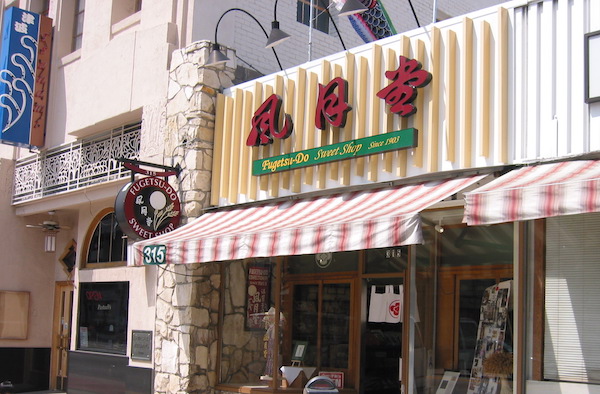
Owned by the Kito family for three generations, this confectionery shop, which specializes in mochi and manju rice cakes and other sweet treats from the Land of the Rising Sun, is not only Little Tokyo’s oldest-operating business, but the oldest Japanese American-owned business in the United States. Founded in 1903 by Seiichi Kito, an immigrant from Gifu, Japan it is currently owned by his grandson, Brian and still operated by members of the Kito family. Though the shop has been located on east 1st Street since 1903, it has operated over the years in three storefronts: the first until 1942 (when the family was incarcerated with other Japanese Americans at Heart Mountain, Wyoming during World War II), a second location in 1946, and the current location, which opened in 1957. The name “Fugetsu-Do” is the generic term for “confection shop” in Japanese.
10. Los Angeles Sister Cities Monument
1987
1st and Main streets, Downtown
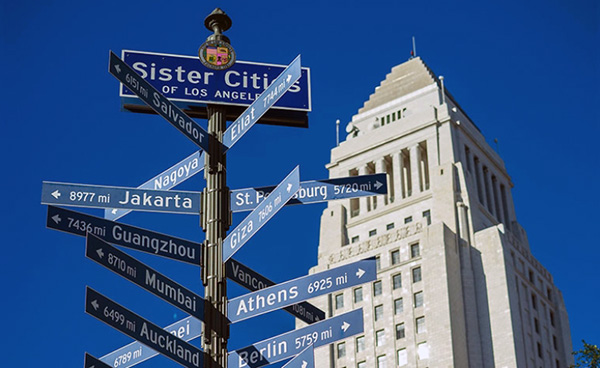
On the northeast corner of 1st and Main streets stands a pole bearing signs (in the “Blue Blade” style, no less) for every one of Los Angeles’ 25 Sister Cities, each pointing towards their location. The signs range from Lusaka, Zambia (the farthest sister city, 10,017 miles) to Vancouver, Canada (the nearest, 1,081 miles) and everywhere in between. Nagoya, Japan is Los Angeles’ oldest sister city (1959); Yerevan, Armenia is the newest (2007). Los Angeles, an Olympic host city (1932, 1984, 2028) also has that in common with sister cities Athens (1896, 2004), Berlin (1936), Mexico City (1968) and Vancouver (2010).
11. Site of 1910 Los Angeles Times Bombing
1910
Northeast corner of Broadway and 1st Street, Downtown
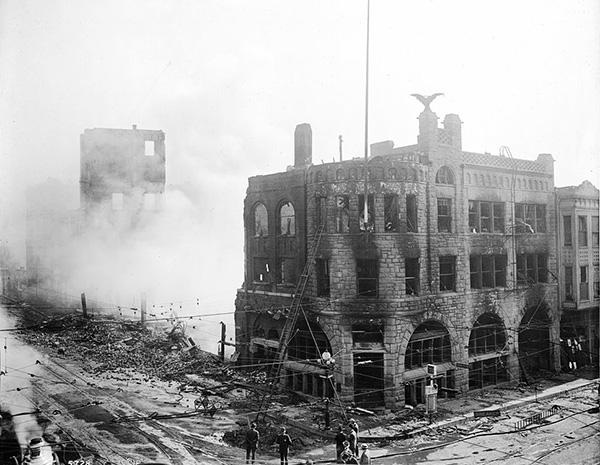
This longtime empty lot, previously the foundation of a state office building condemned after the 1971 Sylmar Earthquake, has some additional history. It was recently dissevered to be the location of the 1910 bombing of the (then) Los Angeles Times building, which happened 113 years ago this month. The dynamite bombing was discovered to have been the work of Ortie McManigal and brothers John and James McNamara, all affiliated with the Iron Workers Union, in what was meant to protest the newspaper’s staunchly anti-union practices at the time. Twenty-one people died when the 16 sticks of dynamite exploded just outside the building at 1:07 a.m. on October 1, 1910. The explosion was exacerbated by natural gas lines which blew up a large section of the building. The Times since built a new building in its place, and later relocated across 1st Street before it moved out to El Segundo in 2018. The site may or may not be a public park in the future.
NAVIGATIONAL NOTE: If heading west to MacArthur Park, skip to #18.
12. Site of Court Flight
1904 (demolished 1943)
Broadway between Temple and Hill streets, Downtown
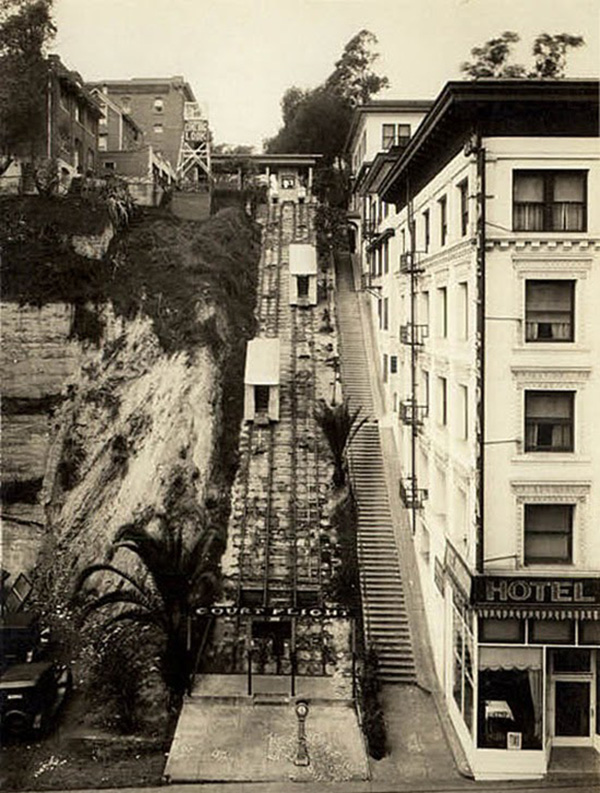
You all know Angels Flight, but it’s time to pay tribute to the city’s other funicular, its cousin to the northeast, Court Flight. Built in 1904, it went up the northern end of Bunker Hill and was next to a former road called Court Street, hence its name. Even shorter than its more famous cousin at 200 feet, it ran steeper at a height of 200 feet. It was burned by a fire in 1943 and never reconstructed. The hill was eventually chipped away to create the Civic Center. The north side of the stairways going up to the Court of Flags (wonder if that was intentional there) in today’s Grand Park is the precise location of ol’ Courty.
13. Hall Of Justice
1926
Temple Street and Broadway, Downtown
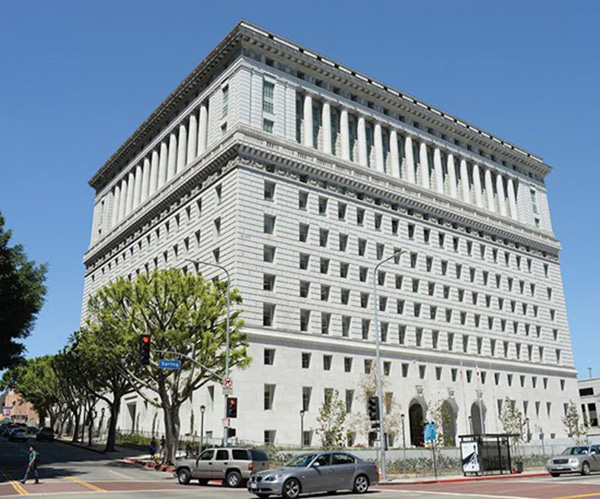
No, you won’t find Superman or any of the Super Friends here. But this building, the oldest surviving government building in the Los Angeles Civic Center, was built in the mid-1920s as the original Los Angeles County Courthouse and Central Jail (which once housed the likes of Busy Siegel, Sirhan Sirhan and Charles Manson), as well as the headquarters for the Sheriff’s Office, the District Attorney and the County Coroner. This Beaux Arts-style building was designed by Allied Architects Association, an all-star team of local architects put together to design publicly-funded buildings. In the 2010s, the building underwent a major renovation project to modernize the facilities and repair damage from the 1994 Northridge Earthquake. It is now a LEED Gold Certified building (gotta be sustainable, y’all), following the 2015 restoration.
14. Fort Moore Pioneer Memorial
1957
451 N. Hill St, Downtown
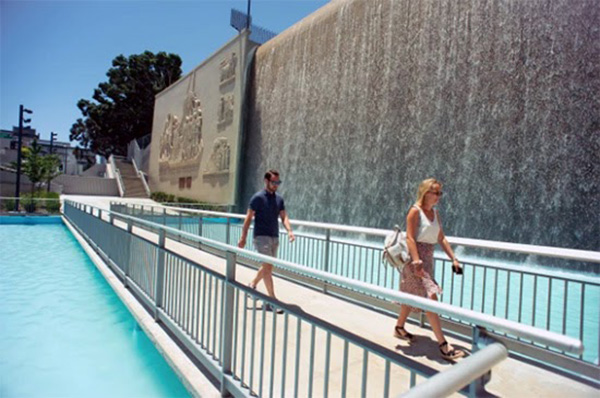
Way, way, waaaaay back before we had tall building and freeways, Downtown Los Angeles (well Los Angeles, period back then) had a bunch of hills, Bunker Hill being the most famed one. There was also Fort Hill, the site of a Mexican-American War encampment. On July 4, 1847 the facility was called Fort Moore (and the hill Fort Moore Hill), after Captain Benjamin D. Moore of the U.S. 1st Dragoons regiment, who was killed six months earlier in a battle near San Diego. The 1st Dragoons and the Mormon Batallion established the new fort and raised the U.S. flag during the first-ever observed Independence Day in Los Angeles. This event was immortalized in a bas-relief stone monument made in the 1950s. Speaking of forts, the very street you’re riding (or walking, or skating, or scootering, or stand-up-paddling, or pogo-sticking) was once called “Fort Street,” which inevitably led to directional problems some six blocks south of here. The monument also includes a fountain, which was shut off in 1977…due to the drought at the time, but revived in 2018 after a massive renovation. So where’s the actual hill, you ask? It was bulldozed away in the late 1940s to make room for the 101 Freeway.
15. Chinatown Gateway Monument
2001
Broadway and Cesar E. Chavez. Avenue, Chinatown
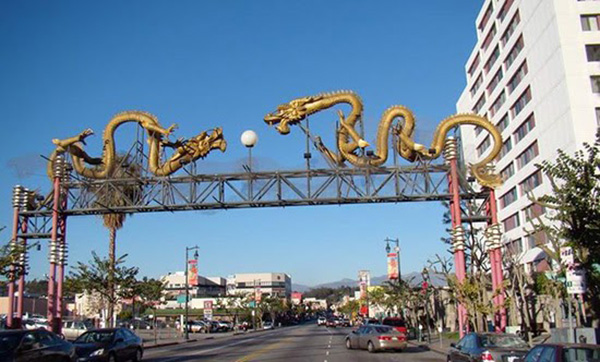
Designed to be the symbolic entrance to Los Angeles’ Chinatown District, The Chinatown Gateway Monument, a.k.a. the Twin Dragon Towers Gateway, depicts two dragons grabbing at a central pearl, which symbolizes luck, prosperity, and longevity. The 25-foot-tall structure was put up in 2001 and occasionally emanates steam coming from the dragons’ mouths. Unlike Anglo dragons, the creatures in Chinese folklore are the good guys, meant to scare away evil spirits.
16. Capitol Milling Company
1883
1231 N. Spring St, Chinatown
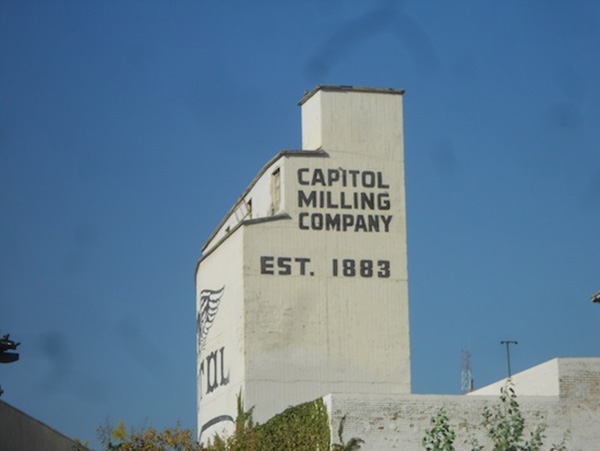
One of the last visible vestiges of Los Angeles’ agricultural industry, this family-owned flour mill operated from 1831 to 1997, before moving its operation to a much larger facility in Colton. The facility that still stands today was built in 1883. The mill supplied flour to clients such as Ralphs, Foix French Bakery and La Brea Bakery. In 1999, the family-owned operation was purchased by industry giant Con-Agra Co. The historic building – the oldest commercial building in Los Angeles, built even before the railroads arrived in Los Angeles, still has a horse-tethering ring, back to the days when grain was hauled by horse carriage from farms in the San Fernando Valley. The eight-building complex, now owned by the Rivoli family (who owns the San Antonio Winery across the river), underwent a massive renovation completed in 2020 so that the 19th century facility can live on in the 21st century as office, retail and restaurant spaces.
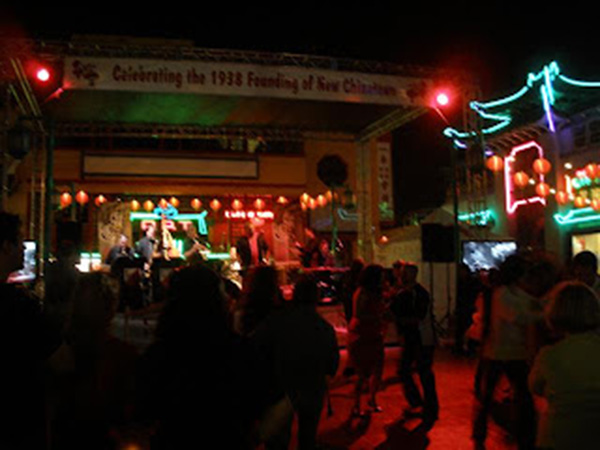
17. Chinatown Central Plaza
1937
Gin Ling Way between Broadway and Hill, Chintown
The northern terminus of CicLAvia is no stranger to public events; it was made for them. During the Summertime it hosts KCRW’s popular Chinatown Summer Nights parties. But don’t let the “Old Chinatown” neon sign fool you — This is actually Los Angeles’ new(er) Chinatown, which dates back to the 1930s. The real Old Chinatown was several blocks south, where a thriving community of Cantonese-speaking immigrants lived near the river, north of Aliso Street. Of course, they were kicked out in the early ’30s to make room for Union Station. So they moved a few blocks north, in the former Little Italy, and they’ve been there ever since. Well, not really, since some of them moved east to the San Gabriel Valley and were supplemented with Mandarin-speaking immigrants from Taiwan and Mainland China. But you get the idea.
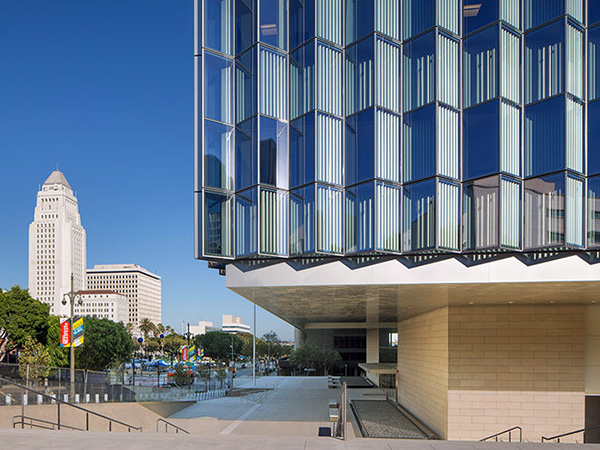
18. U.S. Federal Courthouse
2016
145 S. Broadway, Downtown
This big glass cube that is responsible for blocking your view of the Downtown Los Angeles skyline from Grand Park used to be a hole in the ground was once the site of the Junipero Serra State Office Building, which was damaged in the 1994 Northridge Earthquake and abandoned and demolished in 1998. This 10-story, 400-foot-tall U.S. Federal Courthouse building (don’t we already have a few of those?), designed by Skidmore Owings and Merrill, opened in 2016. Do check out the super subtle embossed-glass bald eagle situated over the main entrance on 1st Street.
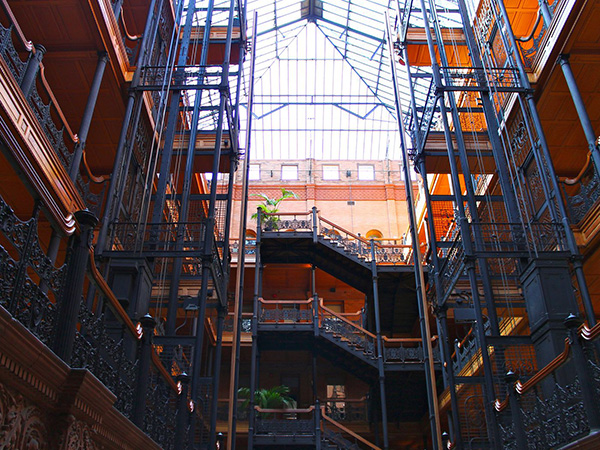
19. Bradbury Building
1893
304 S. Broadway, Downtown
A building that’s famously meh on the outside, but OMG from the inside, this building has been featured in movies from Chinatown to Blade Runner to 500 Days of Summer. Designed by Sumner Hunt and modified by George Wyman, this 5-story Italian Renaissance Revival/Romanesque Revival structure was designed to look like the 21st century from 19th century eyes. Despite the ahead-of-its-time design, this building has nothing to do with sci-fi author Ray Bradbury, but was named after developer and 1800s rich dude Lewis Bradbury, who founded his namesake city in the 626.
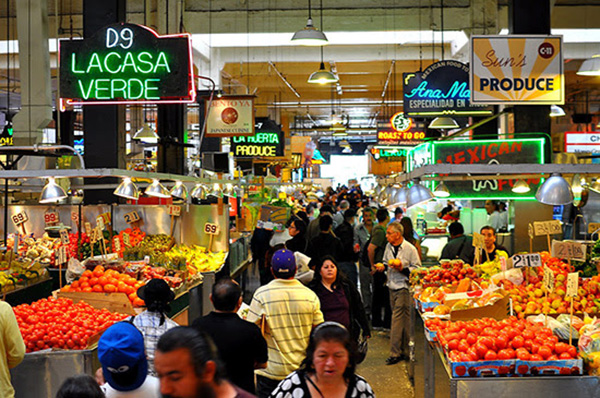
20. Grand Central Market
1917
317 S. Broadway, Downtown
Everyone knows this is Los Angeles’ premier public marketplace, and the Militant probably doesn’t need to include this since you may or may nor already be getting your Eggslut on or a Tiger Tail from The Donut Man (The Militant, on the other hand, prefers tacos and tortas from Roast To Go, and will incite a riot in the event that eatery is kicked out by gentrification). 108 years old and still going strong!
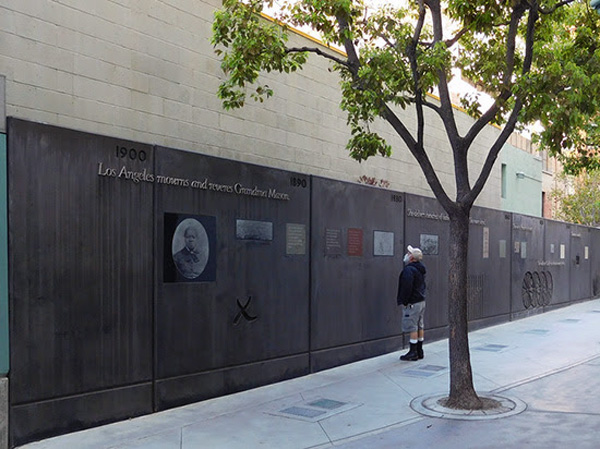
21. Biddy Mason Park
1991
331 S. Spring St (entrance on Broadway), Downtown
Born into slavery in Georgia over 200 years ago, Bridget “Biddy” Mason was a renaissance woman of her time. Having followed Mormon settlers west, she gained her freedom when California became a slavery-free Union state. As a nurse, she founded the first child care center in Los Angeles and later became a lucrative property owner and philanthropist, having founded the First AME Church, now a major institution in Los Angeles’ African American community. She died in 1891 and was buried at …Evergreen Cemetery (which you might have also seen earlier…see how things all tie together?). A century after her passing, this mini-park in DTLA, on the site of her house, was built and dedicated.
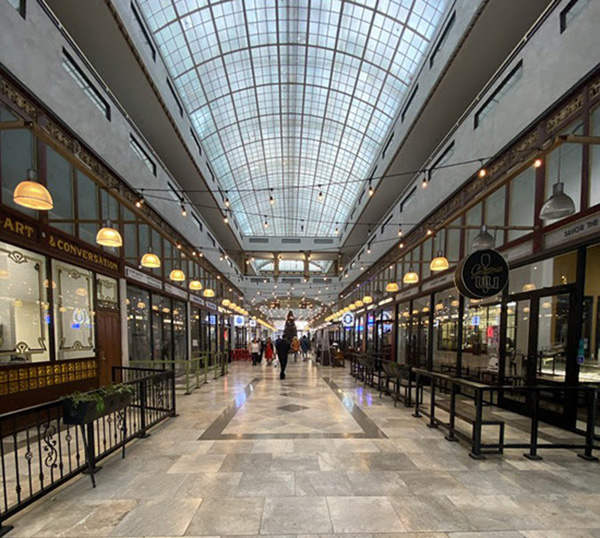
22. Broadway-Spring Arcade Building
1924
541 S. Spring St, Downtown
This unique building is actually three, opened in 1924 on the site of Mercantile Place, a 40-foot street cut between 5th and 6th streets connecting Broadway and Spring. Mercantile Place was a popular shopping and gathering locale in the early 1900s. Having fallen into decay by the 1970s, it was recently renovated and is now famous for, of all things, vendors selling rock band t-shirts. On the first Thursday nights of each month, it’s one of the main venues for DTLA Artnight. And The Militant probably doesn’t need to mention that this building is home to the DTLA Guisado’s.
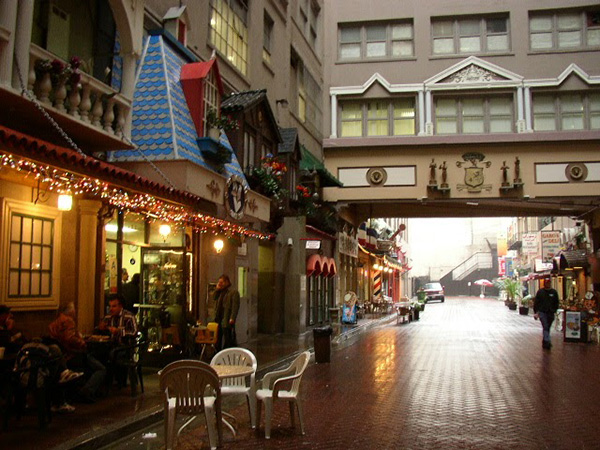
23. St. Vincent Court
1868
St. Vincent Ct and 7th Street, Downtown
You’d hardly knew it was there, but this alley nestled between Broadway and Hill (blink and you’ll miss it!), with its decorative brick pavement and European decor, seemingly belongs to another world. Originally the site of a Catholic college that was the predecessor of today’s Loyola Marymount University, today it’s a unique food court featuring Armenian and Middle Eastern eateries. The Militant calls it, “Littler Armenia.” For all you Swifties out there, it’s also where Taylor Swift frolicked in the rain in the music video of her 2018 song, “Delicate.” For more on St. Vincent Court, check out this 2008 Militant Angeleno post for more info!
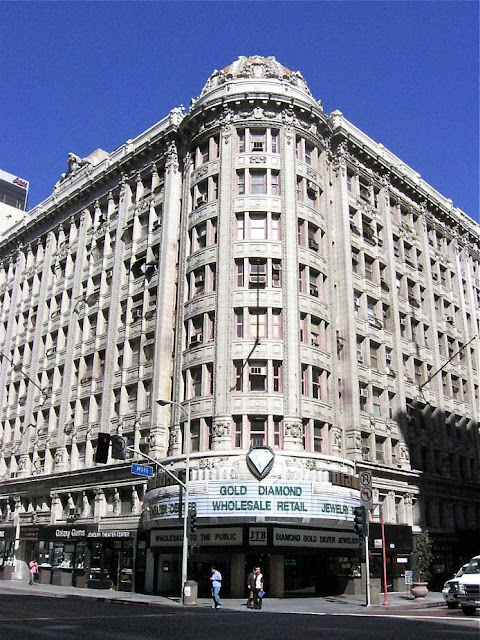
24. ‘Diamonds’ Theatre (Warner Theatre & Original Pantages Theatre)
1920
401 W. 7th Street, Downtown
This jewelry retail mart is actually a re-purposed theatre that was once the original Pantages Theatre, opened in 1920 by Greek American entertainment magnate Alexander Pantages for Vaudeville productions. Designed by B. Marcus Priteca (who also designed today’s Pantages Theatre in Hollywood), it was sold in 1929 and eventually became the Warner Theatre, screening motion pictures from the WB during the days when the movie studios ran their own theatres. The theatre closed down in 1975 and became a jewelry mart in 1978.
25. Wilshire Grand Center
2017
900 Wilshire Blvd, Downtown
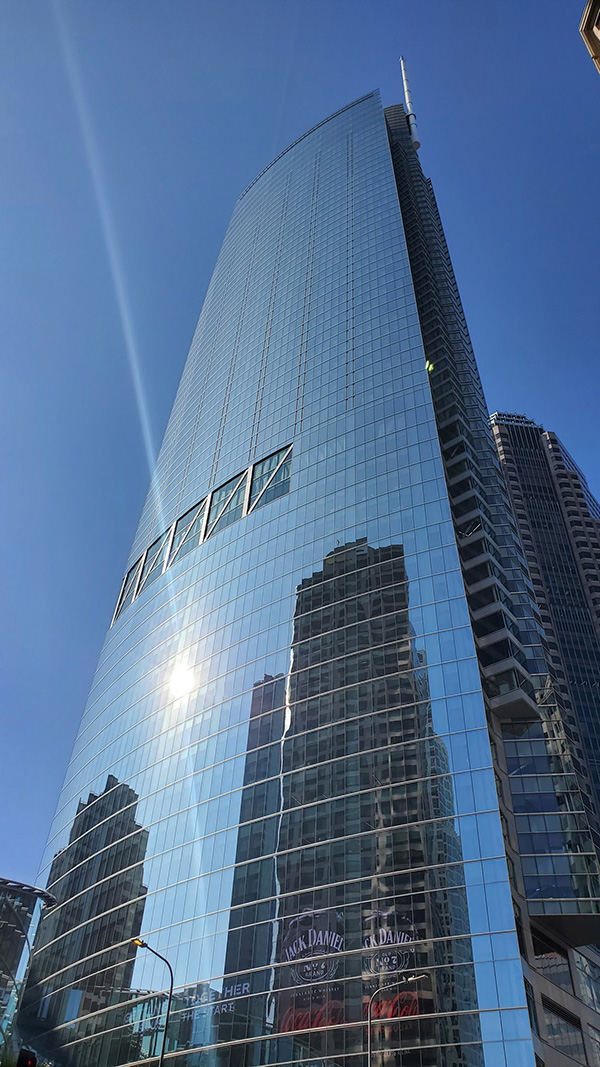
The Wilshire Grand Center, Los Angeles’ (and the West’s — suck on it, Transbay Tower SF!) tallest building at 73 stories and 1,100 feet (kinda sorta, there’s a spire, you see…) opened in June 2017 and is the city’s only modern skyscraper without a flat roof, the only Los Angeles building since Hollywood’s Capitol Records tower in 1956 to feature a spire, the first skyscraper anywhere to sport a mohawk, and it also has its own irreverent Twitter account. 😉 Owned by Korean Air (hence the red and blue taeguk LED logo), the tower houses the 900-room Hotel Intercontinental with its 70th-floor Sky Lobby and the unique Spire 73 skybar, with wonderful views of the south and west (the sunset vista from here is not to be missed). The building’s construction site was the location of “The Big Pour” – which lasted from February 15-16, 2014, where 21,200 cubic yards (81 million pounds) of concrete for the tower’s foundation were continuously poured – earning it a Guinness World Record for that feat. Before the skyscaper, the site was home of the Wilshire Grand Hotel, formerly (in reverse chronological order) the Omni Hotel, Los Angeles Hilton, Statler Hilton and Statler Hotel.
26. City View Lofts/Young’s Market Company Building
1924
1610 w. 7th St., Pico-Union
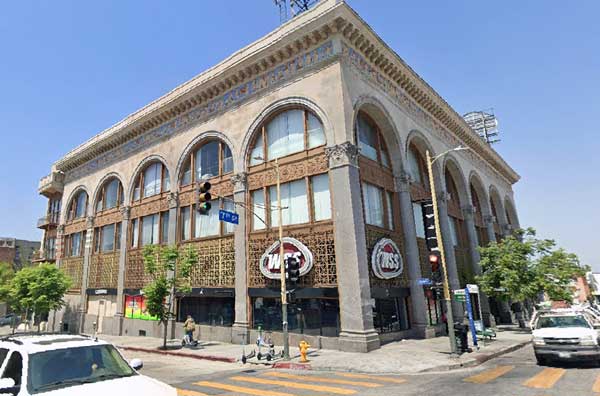
Ever wondered what’s the deal with this century-old, 4-story Italian Renaissance-style building? It was built in 1924 as a liquor warehouse and original headquarters for Young’s Market Company, which still operates today as the largest liquor distributor in the West. This building features actual marble columns and a decorative frieze made of terra cotta. The company, in the roaring, pre-depression 1920s, just felt like it. The building was looted and burned in the 1992 Riots and was rehabbed in 1997 to become the City View lofts. The ground-floor retail is home to a Warehouse Shoe Sale store. The building is in the National Register of Historic Places.
27. Gen. Douglas MacArthur Monument
1955
Southeast corner of MacArthur Park, Westlake
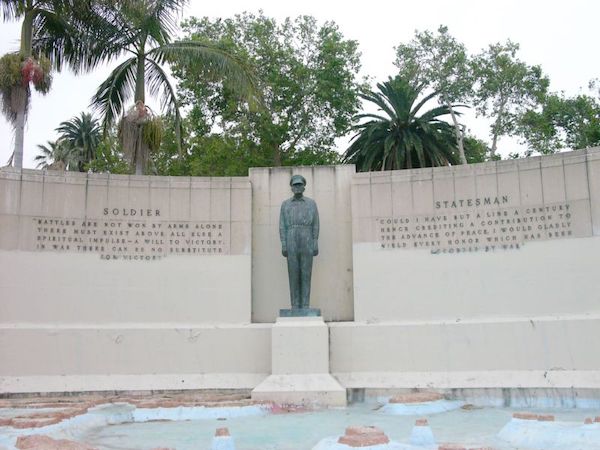
It’s sort of strange how a monument to the park’s namesake seems almost invisible (Gen John Pershing, MacArthur’s WWI counterpart, could totally identify). In fact, most people don’t know it’s even there, but on the southeast shore of the lake is a dormant memorial fountain featuring a statue of the WWII general overlooking a model of the Pacific theatre (no, not that one) where he led allied forces to eventual victory. It was designed and built in 1955 by Roger Noble Burnham, who previously sculpted the Tommy Trojan statue on the USC campus and taught at the Otis Art School, formerly located nearby.


You must be logged in to post a comment.